
Historical serious games as a way of learning about and remembering history.
I first encountered serious games ten years ago. Serious games are games that possess not only entertainment value but also a specific purpose, such as education or medical treatment, and are used in a variety of situations. At the time, the Korean translation for serious games was “functionality games” or “games for education,” and such games were in fact being utilized mostly in educational settings. They were used mainly regarding subjects included in the school curriculum such as language learning and mathematics. Studying serious games in graduate school, I learned that they are not limited to the field of education but can also influence people’s consciousness or way of thinking, elicit actions, and create platforms to connect people, and I became increasingly fascinated by them. I am currently continuing this research, grounded in a socio-cultural context, with a particular focus on how serious games have been developed and received in Japan and South Korea.
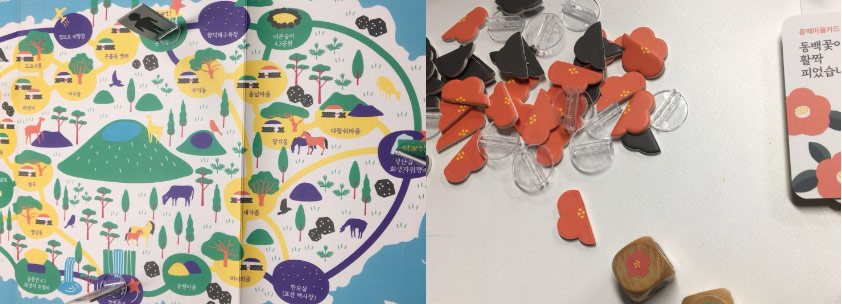

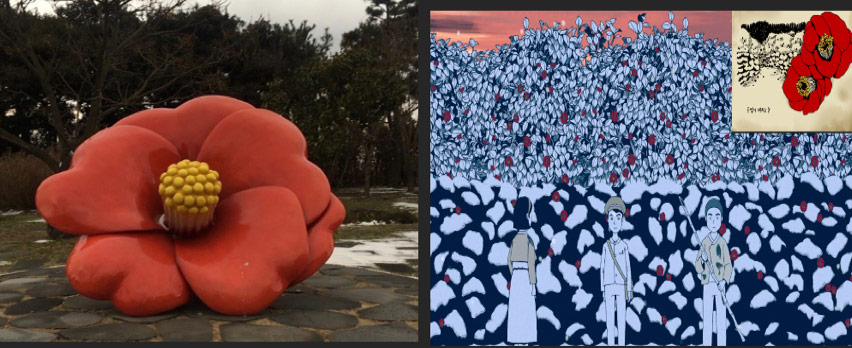
Recently, I have been studying historical serious games that deal with historical events. “History” is a popular theme in games, and in the past there have been games such as the “Romance of the Three Kingdoms” series that deal with historical topics. The historical serious games that have appeared recently, however, can be said to differ from these games of the past insofar as they do not deal with glorious history or historical events of which people can be proud. Many of them deal with topics that require political, social, or ethical consideration, or events that can lead to discourse that differs from the standard views of history and education in the country or society in question. Examples of such historical serious games include “My Child Lebensborn,” the theme of which is the “spring of life” in Nazi Germany, “Pechka,” which is set in Russia and depicts the struggles and setbacks of young Koreans during the Japanese colonial era, and “Hana wo sakaseiyō [Let Flowers Bloom]” (Photograph 1), a game about the 1948 Jeju Uprising. I interviewed the creator of “Hana wo sakaseiyō” and visited Jeju Island to conduct a survey (Photography 2).
In the past the study of serious games has been centered in Europe and the United States, so there has been little serious game research in East Asia. There are also a few examples that explore involving players through provoking messages and the playfulness of games. However, interest in historical serious games is increasing.
Regarding media like novels, movies, and comic books that deal with history, debates often arise about how faithful they are to events, or how much of their content is true and how much is invented. Regarding historical serious games that aim to educate players on history, too, certainty and clarity in recreating events is seen as important. When we think about serious games, however, how to experience historical events through a game and how to provide game play are also important issues to consider. In historical serious games, players experience history unfolding as they make choices and judgements. Since a players experience varies as a result of their choices and actions, and because gameplay often involves interaction with other players, in some cases, the content represented in a game is not received in a direct or uniform manner. In historical serious games, the content and messages are shaped by the historical perspectives and intentions of the game developers. However, how these messages are experienced differs from player to player, depending on each individual’s choices and judgments. One of the most interesting aspects of historical serious games is that even when dealing with history not everyone experiences the same things.
Serious games are changing along with the evolution of new technologies. In recent years, in addition to the aim of learning about history, historical serious games such as “Detention,” which is set in Taiwan under martial law in the 1960s, have also been acclaimed as historical documents and their role as a medium of historical preservation. The criticism has been made that games are for entertainment, and it is inappropriate for them to deal with serious content such as history, but this example overcomes this critique and demonstrates the expanding potential of historical serious games. Going forward, I hope to continue thinking about people, society, and culture through the study of serious games that evolve with the times.
Shin Juhyung (Researcher, Ritsumeikan University Kinugasa Research Organization)