
Elucidating the circumstances surrounding medicine in the 1960s through specific cases
![Photograph 1: Matsueda Akiko’s 1960 nendai no kusuri: hokenyaku, anpuruzai, torankiraiza [一九六〇年代のくすり:保健薬、アンプル剤・ドリンク剤、トランキライザー; Medicine in the 1960s: Health Supplements, Ampule Formulations / Health Drinks and Tranquilizers] (Seikatsu Shoin, 2022).](https://www.ritsumei-arsvi.org/wp-content/uploads/2022/06/photo01.png)
I study the social circumstances and debate surrounding medicine in Japan, mainly from the 1950s to the 1970s. The period I study corresponds to a period of high economic growth. During the same period, destruction of the environment through factors such as industrialization caused by rapid economic growth progressed, and harm caused by pollution, such as Minamata disease, arose. There were also multiple instances of drug-induced suffering(D.I.S). Examples of this include the Thalidomide Tragedy and Subacute myelo-optico neuropathy(SMON). In the thalidomide tragedy, fetuses suffered damage when their mothers took Thalidomide, a drug with sedative-hypnotic effects, early in their pregnancy. This occurred because of Thalidomide’s teratogenic properties. SMON was a nervous system illness caused by Chinoform, a medicine taken for intestinal issues, and was characterized by intense stomach pain and numbness of the lower limbs. The verification of safety when drugs were approved at the time was inadequate compared to today’s standards. Beginning with this point, the circumstances surrounding medicine during this period were different from today. I examined this difference using specific cases, and put together my results in a book entitled Medicine in the 1960s: Health Supplements, Ampule Formulations / Health Drinks and Tranquilizers. This was based on my doctoral thesis submitted to Ritsumeikan University’s Graduate School of Core Ethics and Frontier Sciences in 2018.
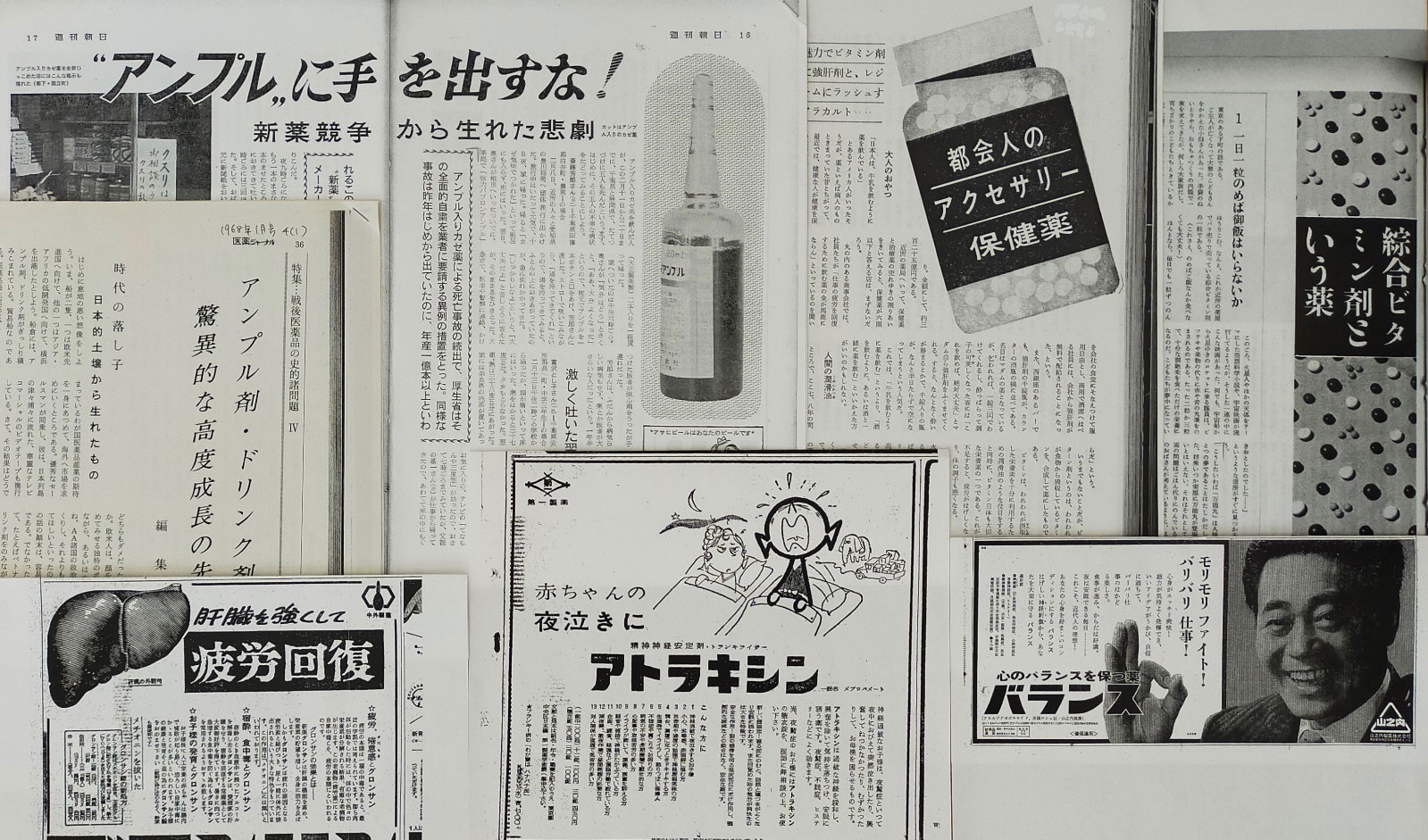
In this book, in addition to the points made above, by examining the cases of health supplements, ampule formulations /health drinks, and tranquilizers, I show that when medicines were approved by the former Ministry of Health and Welfare the kind of thorough scientific basis needed today was not required regarding things like effectiveness, and products were released with little regard for safety. “Health Supplements” refers to vitamin formulations taken to bolster nutrition or recover from fatigue. Ampule formulations, which are no longer sold, were ampules like those containing medicine for injections filled with vitamins or cold medications in an oral solution. Health drinks, which are still sold today as medicine for bolstering nutrition and recovering from fatigue, were originally derived from ampule formulations. Tranquilizers were a type of commercially marketed psychotropic drugs. These medicines were widely advertised by pharmaceutical companies during the period of high economic growth. They became broadly popular throughout Japanese society in what was described as a “boom.” Psychotropic drugs are no longer sold over the counter, but tranquilizers were a kind of anti-anxiety medication sold at the time without a prescription. They were not only used to treat illnesses like “neurosis” and insomnia but were advertised in newspapers as “balance maintaining medicine that removes stress and anxiety and calms your mind and body.” They were presented by pharmaceutical companies as a method of recovering from mental fatigue. During an era in which there was a boom in health supplements that aid in recovery from physical fatigue, pharmaceutical companies positioned tranquilizers as “mental vitamins.” I examine the process of how the sale of tranquilizers came to be regulated. Regarding the cases of supplements and ampule formulations/health drinks, drawing on newspaper and magazine articles and advertisements I also examine how effectiveness or effects were advertised differently from today and how these products were commercialized like foods.
Even today there is D.I.S. But the circumstances in which today’s incidents occur and those in which D.I.S. in the 1960s and 1970s arose are different. Today there are people still suffering damage to their health caused by drug in those earlier eras. Victims and their supporters are engaged in activities such as education concerning D.I.S. that informs others about this suffering. In order to understand the background in which D.I.S., it is necessary to know the circumstances surrounding medicine at the time. The study of problems concerning medicine in the past can also provide knowledge that sheds light on such problems in the present. Going forward, my research will continue to focus on the discourse and movements critical of D.I.S. developed in the 1960s and 1970s, because examining the criticism and debate carried out in the past can inform how we think about today’s problems.
Matsueda Akiko
(Visiting researcher at Ritsumeikan University’s Institute of Ars Vivendi)