
Storytelling and responding – the practice of prison theatre
My research focuses on the “narratives” told by the people involved in prison theatre practices. When people visit the prison to see a play, they are allowed to bring only their tickets and photo identification. All other belongings are kept in a locker, and a detection dog sniffs around their feet, and then finally the audience is shuttled to the theatre – a building that is normally used as a gymnasium – a few at a time by car.
Stepping inside the theatre, we are greeted by the tones of a guitar, the smell of coffee, and the voices of people in high spirits. As we move our eyes over the indigenous art and woodcrafts at the entrance, we are handed an oatmeal cookie and some warm tea before taking our seats. Most of the audience is too busy hugging each other with gratitude for a reunion and looking intently at the costume designs and script pages hung on the wall to take their seats. Surrounded by warmth that almost makes me forget the chill in early November, I look around the theatre room and imagine the tension building backstage.
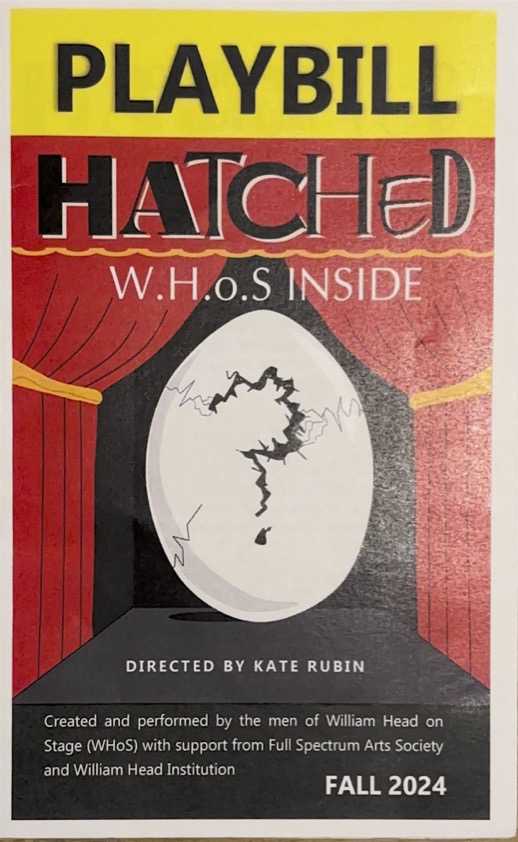
The men’s prison stands on the Metchosin coast, a municipality in Greater Victoria on Vancouver Island, British Columbia, Canada. Deer roam its grounds, and whales breach in the nearby waters. My research centers on individuals engaged with the William Head on Stage theatre company based in the prison. When the performance begins, the atmosphere transforms. The men’s voices and movements command the stage, making their narratives central to the space. A love letter from someone cherished. An account of Indigenous heritage and homelessness. Through song and poetry, they probe the question, “What does freedom mean?” – with dignity, sincerity, and passion. After an intense silence rivets the audience, a standing ovation erupts, as if releasing pent-up tension. Yet, there is the inescapable realization that the performers are incarcerated. Many serve life sentences. Within an hour of exiting the stage, they must return to cells for the mandatory headcount. Their onstage tears bear testament to these realities.

The purpose of this visit was to attend the performance and conduct interviews with the director. What caught my attention, however, was the dialogue between performers and audience members after the performance ended. The inside artists presented their own lives to others through narratives, and the audiences received them and responded in their own ways. Along with this being a place to “witness” each other’s existence, it can also be described as an attempt to get closer to each other’s “lives.” Existing studies in applied theatre and criminology have documented the positive effects of theatre activities on participants, including incarcerated people. By taking a micro view of participants’ creative processes and a macro view focusing on their interactions with the community, however, it should also be possible to consider prison theatre practices not to be exceptional initiatives but to be an opportunity to come face to face and coexist with people who have experienced different lives. In future research, I hope to shed light not only on the experiences of former incarcerated people who participated in theatre but also on those of audience members who responded to their performances and the artists who supported their expressions and dialogues. By focusing on the narratives and relationships of people involved in theatre, I aim to elucidate an aspect of human practice through which people try to express themselves and respond to others.
Note: This research was conducted with the approval of Ritsumeikan University’s ethical review for
research involving human subjects.
Konomi Kato
(Graduate Student, Graduate School of Core Ethics and Frontier Sciences,
Ritsumeikan University/ JSPS Research Fellowship for Young Scientists)